Jigsaw Puzzle Fun with Pokemon Friends
Reviews
Jigsaw Puzzle Fun with Pokemon Friends keeps its scope narrow and executes it cleanly. The appeal comes from recognizable characters, smooth drag-and-drop controls, and a difficulty system that adjusts piece count rather than adding complex rules. It is best suited to players who want a low-pressure puzzle activity, including children and adults looking for a calm distraction. The main limitation is variety: the core loop stays the same across images, so anyone seeking mechanical depth may find it repetitive over time.
Description
Assembling Pokemon Scenes
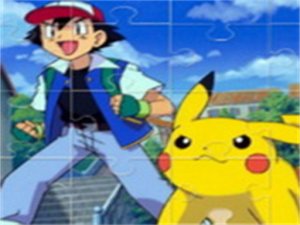
Each puzzle begins with a scattered set of pieces and a reference image of characters such as Pikachu, Charmander, or Squirtle in a playful setting. The goal is simple: move every piece into its correct spot until the picture is complete. Pieces can be rotated with a tap when orientation matters, and the drag-and-drop system responds smoothly whether you are placing a single piece or filling a gap in the border.
Choosing Your Challenge
Difficulty is controlled by piece count. Fewer pieces suit a quick session or younger players who are still learning the controls, while larger counts extend the same image into a longer, more methodical task. Because the puzzle content stays consistent across difficulty settings, the choice affects time and concentration rather than introducing new rules. That makes it easy to start small and scale up as confidence grows.
Unlocking and Progression
Completing a puzzle unlocks additional images from the collection. This creates a steady loop: finish one scene, reveal the next, and decide whether to attempt it at a higher piece count or move on. The unlock system gives each session a concrete outcome beyond the satisfaction of a finished picture, and it encourages players to see more of the Pokemon artwork included in the game.
Approaching a Puzzle
Edge pieces are the most reliable starting point because they define the frame and reduce the remaining search area. Sorting by color or pattern helps when the middle section looks uniform, and rotating a piece before placing it prevents repeated adjustments later. Stepping away for a moment often makes a stubborn section easier to read when you return. The game is built for unhurried play, so there is no penalty for taking your time.





Editorial Notes