Route Builder Logic Challenge
Reviews
Route Builder Logic Challenge succeeds by focusing on a single, well-executed mechanic: rotating tiles to form a continuous path. The puzzles start simple but grow into genuinely tricky configurations that require foresight. The lack of timers removes all pressure, letting players think at their own pace. The minimal visuals keep distractions away, and the optional hints are a nice touch for stuck moments. It is a solid choice for anyone who enjoys logic puzzles without the stress of time limits.
Description
Core Puzzle Mechanics
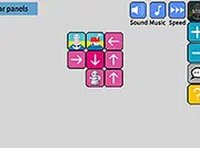
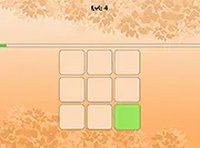
At its heart, Route Builder Logic Challenge asks players to connect a starting point to an ending point by manipulating individual tiles on a grid. Each tile contains openings on one or more sides, and the goal is to rotate these tiles so that every opening aligns perfectly with the opening of an adjacent tile. This creates an unbroken pathway from the source to the destination. The game provides immediate visual feedback with each rotation, allowing players to see their progress in real time. There is no timer or penalty for incorrect moves, encouraging a thoughtful and methodical approach.
Level Design and Progression
The puzzles begin with simple, small grids that introduce the basic concept of tile alignment. As players advance, the grids grow larger and introduce more complex tile shapes, such as T-shaped and cross-shaped pieces. These additions require players to think several moves ahead, as a single tile can affect multiple pathways. The difficulty curve is carefully calibrated to ensure that each new challenge feels like a natural step forward, keeping the experience engaging without becoming frustrating.
Visual and Interactive Design
The interface is intentionally minimal, with clean lines and a muted color palette that reduces visual clutter. This design choice helps players focus entirely on the logical relationships between tiles. The controls are intuitive: players simply click or tap on a tile to rotate it, and the board updates instantly. This responsive interaction makes the game feel fluid and satisfying, even when solving more complex puzzles.
Support Systems for Players
For those moments when a puzzle seems particularly stubborn, the game includes an optional hint system. Hints provide subtle guidance, such as highlighting a tile that is correctly placed or suggesting a tile that needs adjustment, without revealing the entire solution. This allows players to maintain their sense of accomplishment while still receiving help when needed. The hints are designed to encourage independent problem-solving rather than dependency.